
Creating a Habit
A habit in Scope has a name, a category, a schedule, and a unit of measurement. This page walks through each of those pieces.
Naming Your Habit
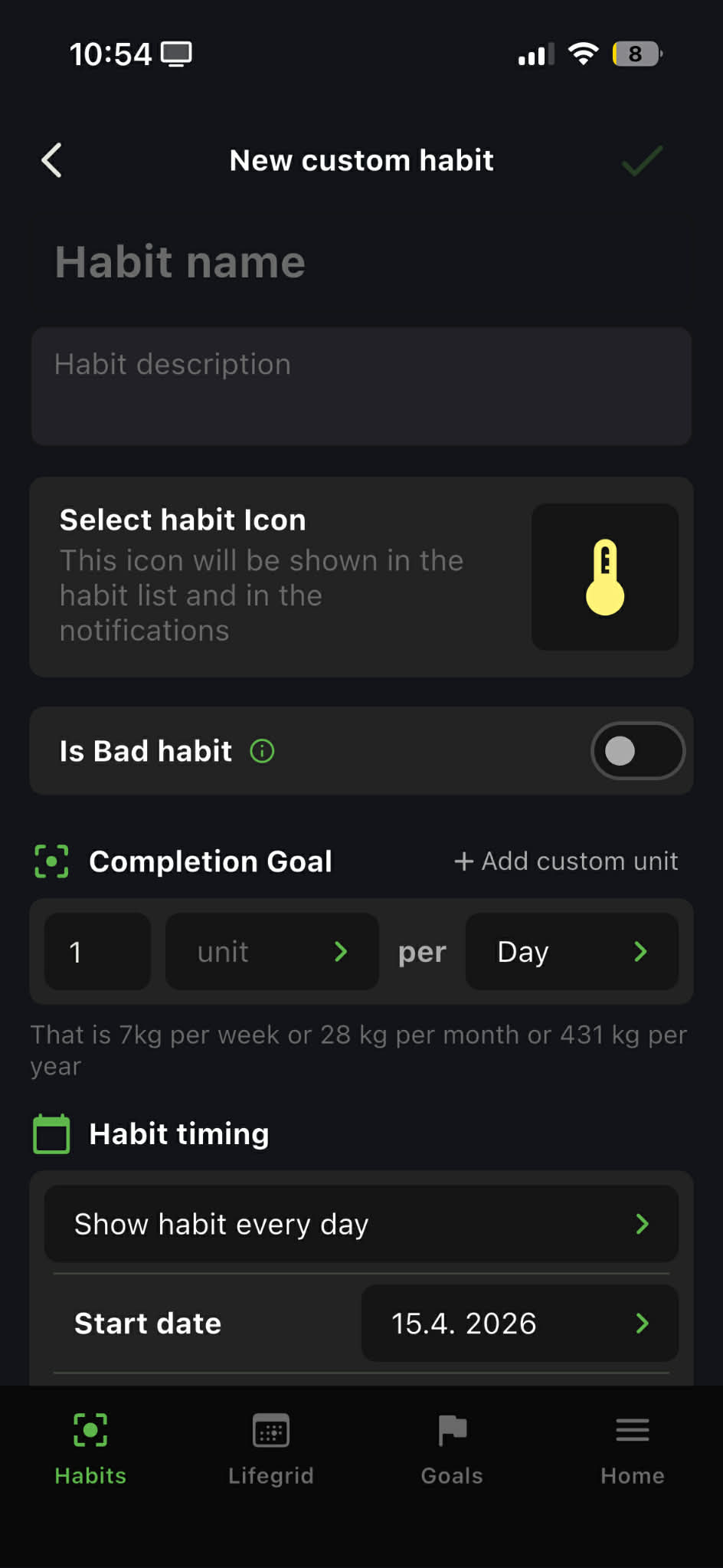
Give the habit a clear, actionable name. Start with a verb, be specific about the action, and keep it short enough to read at a glance.
| Works well | Doesn't work as well |
|---|---|
| "Go for a run" | "Run" |
| "Read a book" | "Read" |
| "Practice coding" | "Coding" |
| "Drink enough water" | "Water" |
| "Avoid phone before bed" | "No phone" |
For bad habits, name the behavior you're trying to stop: "Binge-watch TV", "Scroll social media mindlessly", "Eat junk food late at night."
Choosing a Category
Every habit belongs to a category, and the category determines the class of the soldier or demon it produces. Good habits use life-area categories like Fitness, Learning, or Mindfulness. Bad habits use the seven deadly sins - Sloth, Lust, Wrath, and so on - to name the psychological driver behind the behavior.
The category matters more than you might think: it shapes your party's composition in battle. A mix of life areas gives you a mix of classes; a lopsided habit list gives you a lopsided party.
If you want a balanced party
Spread your good habits across categories tied to different classes - one Knight-flavored (Fitness/Work), one Mage-flavored (Learning/Mindfulness/Finance), one Healer-flavored (Nutrition/Health), one Bard-flavored (Social).
Good Habit or Bad Habit
This is the one choice you can't undo. Pick whether the habit is something you're trying to build (good) or stop (bad). The two follow different rules - see Good Habits vs Bad Habits for the full comparison.
Setting the Schedule
A schedule has three pieces:
- Interval - how often the completion goal resets: per day, per week, or per month.
- Show days - which days the habit appears in your list. Weekdays, specific dates, or "every day."
- Completion goal - how much counts as "done" for the interval.
See Intervals & Show Days for the detail of how those three combine.
Choosing a Unit
Most habits are simple check-offs - one tap and you're done. But some habits are measured: 20 push-ups, 10 pages read, 2 liters of water. Units tell Scope which kind yours is. See Habit Units.
Optional Touches
- Description - a sentence or two about what doing the habit actually looks like day to day.
- Icon - a visual for the habit card. There are hundreds to pick from; choose one that matches the specific action, not just the category.
- Reminder - a daily notification time. Only fires on scheduled show days.
- Stat contributions - tag the habit with one or more real-life stats it should feed into.
Saving and Editing
Once created, you can still edit almost everything - the name, description, icon, category, schedule, stats, and reminder. See Managing Habits. The two things you can't change are the good/bad flag and the creation date.