
Rarity Tiers
Every item has a rarity - Common, Rare, Epic, or Legendary. Rarity drives three things at once: how big the item's stat budget is, how many bonus stats it can roll, and how much it costs to buy.
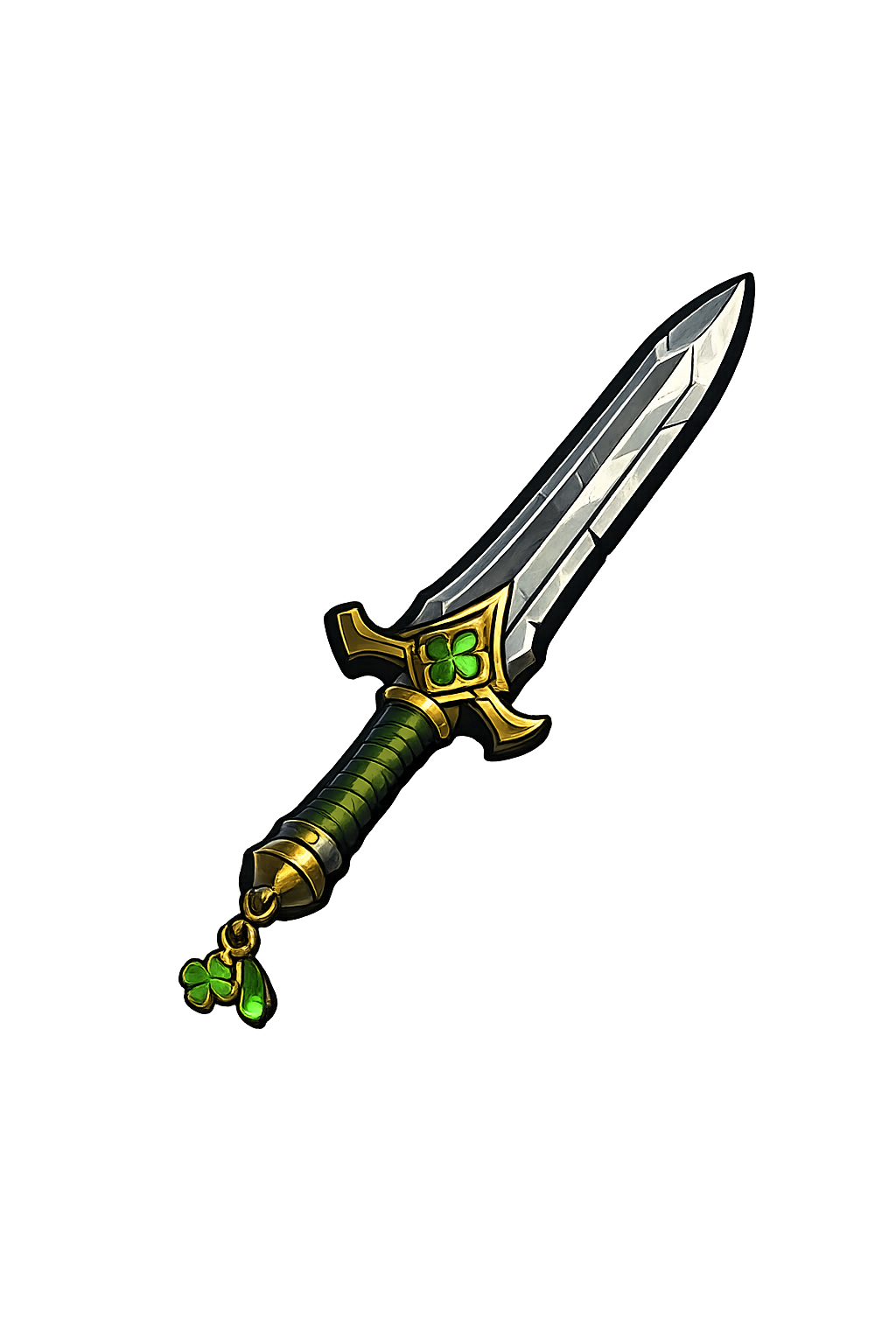
The Four Tiers
| Rarity | Stat Budget | Max Bonus Stats | Price |
|---|---|---|---|
| Common | Baseline | Up to 1 | Baseline |
| Rare | Noticeably bigger | Up to 1 | Noticeably higher |
| Epic | Substantially bigger | Up to 2 | Substantially higher |
| Legendary | Dramatically bigger | Up to 3 | Dramatically higher |
Non-common items display with their rarity prefix in the UI - "Rare Raider's Blade," "Epic Amulet of Focus," "Legendary Crown of Kings." A colored name and a rarity badge make the tier visible at a glance.
How Rarity Affects Stats
Rarity applies a budget multiplier on top of the item's base level budget. A rare weapon at level 20 has more raw stats than a common weapon at the same level; an epic has more again; a legendary substantially more.
The multiplier shapes the whole item - base stats and bonus stats alike are scaled by rarity. A legendary isn't just "more stats" - it's better stats in every category, on top of having more of them.
How Rarity Affects Price
Shop prices scale faster than stats do. A rare item has modestly more stats than a common of the same slot and level, but it costs noticeably more. A legendary has double the stats of a common but costs several times more.
The gap is deliberate - higher rarities are a gold sink as well as a power boost. If rarity scaling were proportional (e.g. double stats, double price), you'd always buy the highest rarity available. The premium makes common gear a real choice when you're saving for something specific.
Drop Rates in the Wild
Rarity appears at different rates depending on the source:
- Shop - mostly common, with independent chances per day at rare, epic, or legendary. Most daily shops contain a rare; epics and legendaries are rarer surprises.
- Adventure quest drops - when an item drops, it's mostly common with meaningful but decreasing chances at each higher tier.
- Dungeon first-clears - guaranteed Rare or better. Dungeons are the concentrated high-quality source.
Higher rarities never come guaranteed outside of dungeon first-clears; everywhere else, legendary drops are genuine surprises.
Level Bonus on Rare+ Items
When rare, epic, or legendary items are generated, their actual level rolls a small bonus above the target level. A level-20 rare weapon might be generated at level 22 - more stat budget than a straight level-20 roll would have given it.
Common items don't get this bonus; they match the target level exactly.
This means a lucky rare+ drop can pull your gear ahead of your own level, which adds to the excitement of seeing a rare+ roll come up.
Class Affinity and Rarity
Weapons and armor have a thematic class affinity, but rarity rolls don't care about your class. A Wizard's shop can roll a legendary Knight sword; you can buy it and equip it. The stats are what matter, not the theme.
See Equipment Slots for why class affinity is thematic only.
Rarity and the Loot Loop
The four tiers form the skeleton of the loot loop:
- Common is the baseline - what you'll see most often. Good enough to keep you progressing.
- Rare is the rung above - where meaningful upgrades start to show up.
- Epic is the "that's a real step up" moment - genuinely stronger, genuinely expensive.
- Legendary is the rare event. Seeing one in the shop or dropping from a quest is the kind of moment that makes you spend.
Over a long session, the distribution holds - mostly common, with occasional highlights. That's the design intent.