
Soldier Classes
Four classes, four distinct roles. A soldier's class is determined by its source habit's category and is locked at creation - even if you later change the category, the class doesn't move.
The Four Roles at a Glance
| Class | Role | Combat Shape | From These Habits |
|---|---|---|---|
| Knight | Tank / frontline damage | High HP and armor; the only class with a taunt | Fitness, Work, Other - Wrath, Pride, Greed, Other |
| Mage | Ranged magical damage | Glass cannon; the only class with an AoE and a massive single-target finisher | Mindfulness, Learning, Finance - Sloth, Lust |
| Healer | Support / sustain | Keeps allies alive and repositions the field | Nutrition, Health - Gluttony |
| Bard | Buffer / debuffer | Amplifies the party, weakens enemies | Social - Envy |
Note that bad-habit categories produce demons that use the same four classes under the hood, even though demons never enter combat. See Demons.
Knight
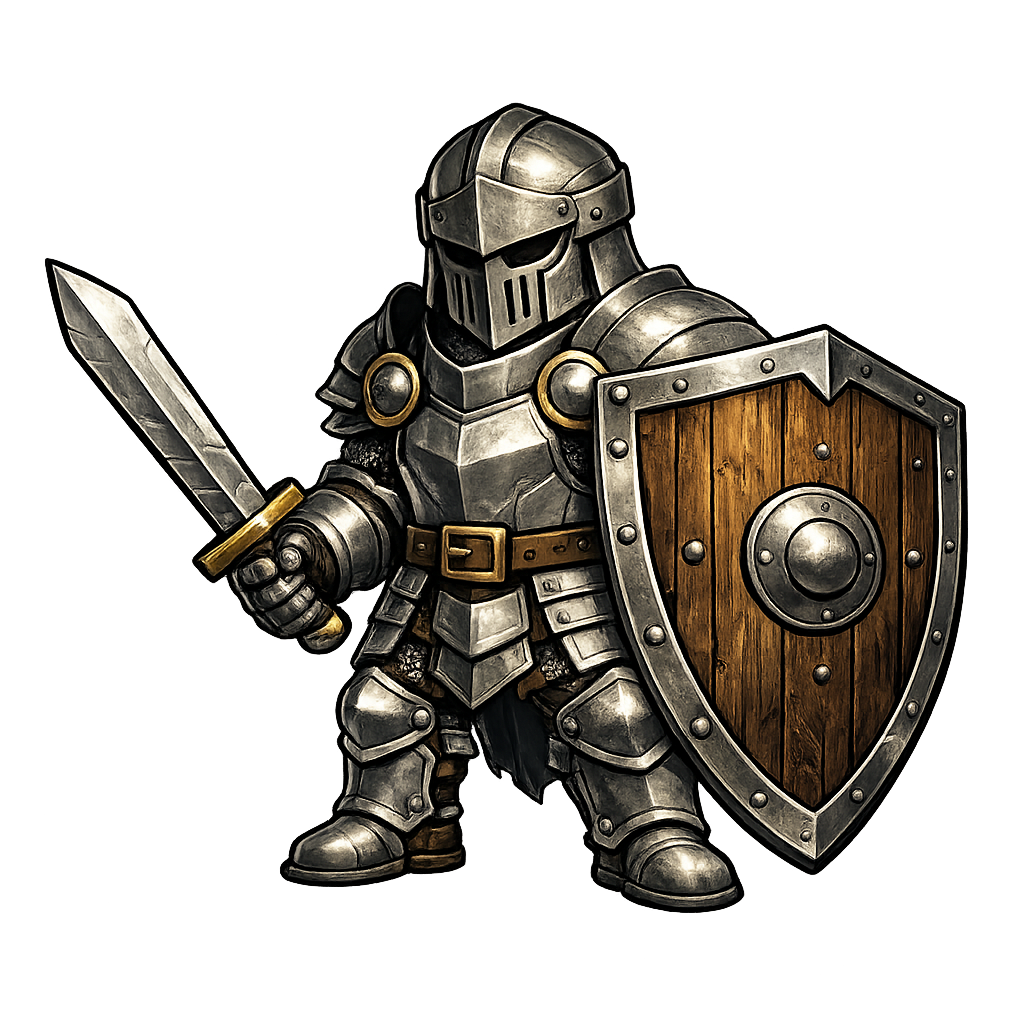
The frontline defender. Knights have the highest base HP and armor of any soldier class. They stand at the front, absorb hits, and trade blows with enemies. A Knight's signature contribution is Taunt - forcing all enemies to target it for a couple of turns - which is the only ability of its kind on any soldier class. Pair that with a big-hitting finisher (Heavy Blow) and a self-protecting damage-reduction buff (Shield Wall), and you get a class that can shut down an encounter by standing in front of it.
Best slot: front row.
Mage
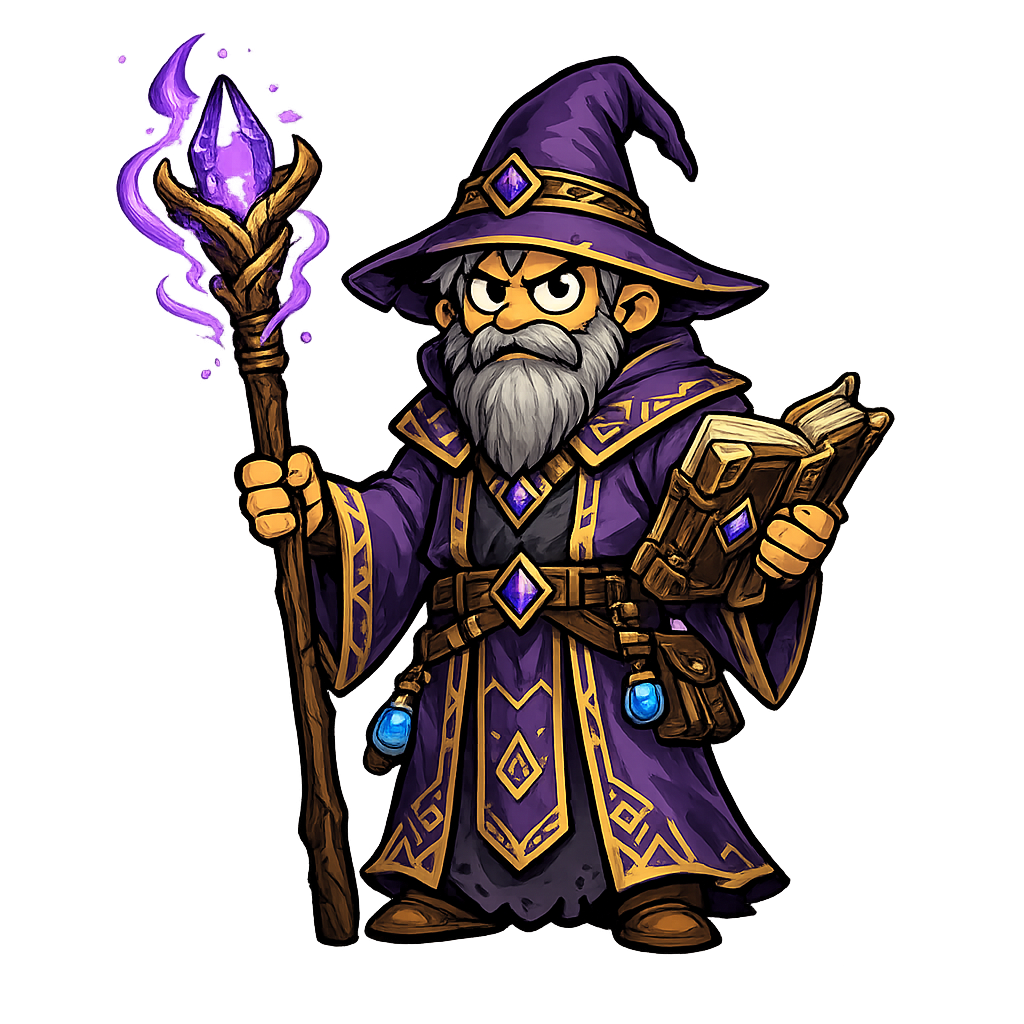
The glass cannon. Mages have the lowest HP and the highest intelligence. They deal more magic damage than anyone else, and they're the only soldier class with an area-of-effect attack (Fireball) and the only class with a truly extreme single-target finisher (Arcane Surge). The trade-off is fragility: put a Mage in the front row and watch them fold.
Best slot: back row.
Healer

The support. Healers restore allies' HP (Healing Touch), remove debuffs (Purify), and have a unique positioning tool (Come Closer) that yanks back-row enemies into the front - within reach of your melee allies. They chip in with a light magic basic attack when nothing needs healing. Balanced intelligence and vitality mean they last a while, but they're not built to carry damage.
Best slot: back row.
Bard

The team multiplier. The rarest class - only Social habits produce Bards. Bards don't put out big damage themselves; they make everyone else hit harder. A Bard's kit is stacked with buffs (War Cry boosts party damage, Rallying Anthem doubles party Speed) and debuffs (Discordant Note drops an enemy's armor and dodge). A party with a Bard can outperform a party without one by a meaningful margin.
Best slot: back or middle row.
How Many of Each You'll Have
Because the class comes from the habit's category, your party composition follows your habit portfolio:
- Build mostly around Fitness and Work habits? You'll have a wall of Knights.
- Mix in Learning or Mindfulness? Add Mages.
- Nutrition and Health? Healers.
- Only Social habits produce Bards - keep one going if you want buff support.
For a well-rounded party
Aim for at least one habit from three different class-producing category groups. A Knight + Mage + Healer party covers defense, damage, and sustain. Add a Social habit and you unlock Bard buffs on top.
Class Perks
Each class carries a small passive perk that differentiates it beyond just skills:
| Class | Perk |
|---|---|
| Knight | Baseline physical damage reduction - reaches the physical DR cap with less Armor allocation |
| Mage | A multiplier on outgoing magic damage, a baseline magic damage reduction, and a small Strength-to-magic cross-feed |
| Healer | Baseline magic damage reduction, and a small Strength-to-magic cross-feed that helps its basic attack |
| Bard | Baseline dodge floor - reaches the dodge cap with less Speed allocation |
These perks are smaller in scale than avatar class perks but follow the same idea - each class has something the others don't.
Related Pages
- Soldier Skills - the four skills each class uses
- Soldier HP
- Levelling & Stats
- Habit Categories
- Demons Overview - the bad-habit counterpart