
Item Generation
Every item in the shop is generated fresh at your current avatar level, with its rarity, stats, and price rolled at generation time. Items are produced by the same generation pipeline used for dungeon drops, quest drops, and achievement grants - the shop just feeds level-appropriate gear into that pipeline on a daily cadence.
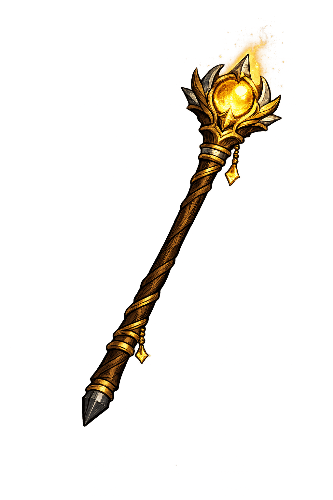
Rolling at Your Level
The shop generates each item at the level you're at right now. If you're level 12 when the shop refreshes, today's items are level 12. If you level up during the day, today's items stay locked at level 12 - they won't re-scale. Tomorrow's refresh picks up your new level.
This is why shop gear is always relevant: as you level up, the shop's stats level up with you.
Rare+ Items Can Roll Above Your Level
When a rare, epic, or legendary item generates, its actual level rolls with a small bonus above your avatar level. A rare weapon at player-level 20 might be generated at level 21, 22, or 23 - ahead of where you are now.
Higher-level items have bigger stat budgets, so this makes rare+ finds extra exciting. A common item is exactly your level; a legendary can be a few levels ahead.
Rarity Rolls
Each daily refresh starts with all eight slots at common, then runs independent rarity rolls for higher tiers. The rolls are independent, so:
- Most days, the shop is mostly common with maybe one rare mixed in.
- A lucky day can have a rare, an epic, and a legendary all present.
- An unlucky day is eight commons straight through.
The distribution skews heavily toward common - rare-plus items are genuinely the exception. Epic and legendary items in particular are rare events that reward checking the shop daily.
Don't expect legendary every day
The average week produces maybe one epic across seven refreshes, and legendary is scarcer than that. If you're shop-farming for specific rarities, rerolling accelerates the process at the cost of gold.
Slot Variety
The shop doesn't bias toward or against any particular slot - the eight templates pulled are shuffled uniformly from the full catalogue. You'll see a mix of weapons, armor, accessories.
There's no class restriction on what the shop offers. A Wizard sees Knight swords. An Archer sees Rogue daggers. Class affinity on weapons and armor is thematic only; the shop doesn't filter by your class.
Stats and Bonus Stats
Each item's stats come from the shared equipment budget system:
- Rarity multiplies the overall stat budget - legendary items have dramatically more raw stats than common items of the same slot and level.
- Slot share controls how much of the total budget each slot gets - weapons and armor get the biggest chunks, accessories smaller.
- Bonus stats roll randomly on rare-and-above items, from the pool of stats not covered by the item's base template. See Bonus Stats.
- Per-item variance nudges every stat on the item up or down a small amount uniformly - a "lucky" item is lucky across every stat together, not piecewise.
Pricing
Every item's buy price is computed at generation from its level, slot, and rarity. The pricing model:
- Level scaling. Prices grow steadily as your level rises. A level-20 item of a given rarity costs substantially more than a level-1 equivalent.
- Rarity premium. Higher rarities cost disproportionately more than their raw stat advantage - a rare has more stats than a common, but it costs a good deal more. A legendary has double the stats but several times the price.
- Slot discounts. Weapons and armor pay full price; accessories come with tiered discounts, so a full eight-slot loadout stays reasonably affordable.
- Per-item price variance. Every item gets a small random bump or cut to its price - identical-looking rolls can cost slightly different amounts.
Slot Discounts at a Glance
| Slot | Price Weight |
|---|---|
| Weapon | Full price |
| Armor | Full price |
| Helmet | Modest discount |
| Gloves | Larger discount |
| Shoes | Larger discount |
| Belt | Larger still |
| Ring | Larger still |
| Necklace | Biggest discount |
Necklaces cost the least of any slot, partly because they have the smallest stat budget, and partly so filling the necklace slot isn't a reason to break the bank.
The Price-vs-Quest-Gold Gap
Shop prices scale slightly faster with your level than quest gold does. Early-game, your quest income comfortably covers shop purchases; late-game, a single common weapon might cost as much as you make from a full day of quests. This gap is intentional - it makes the economy tighten as you progress, so shopping becomes a choice rather than a routine.
See Earning & Spending Gold for how the broader gold economy balances.