
How Habits Power Combat
The connective tissue of Scope. Every real-life action has an in-game echo - this page traces each of those lines.
Good Habits Build Soldiers
The moment you create a good habit, a soldier is born. Its class is decided by the habit's category: fitness and work produce Knights, learning and finance produce Mages, nutrition and health produce Healers, social produces Bards.
Every time you log a completion, that soldier earns XP and heals. Keep a streak alive and both of those rewards grow. Let the habit slide and the soldier's HP drops along with it - start a fight with a neglected habit and you'll feel the cost immediately.
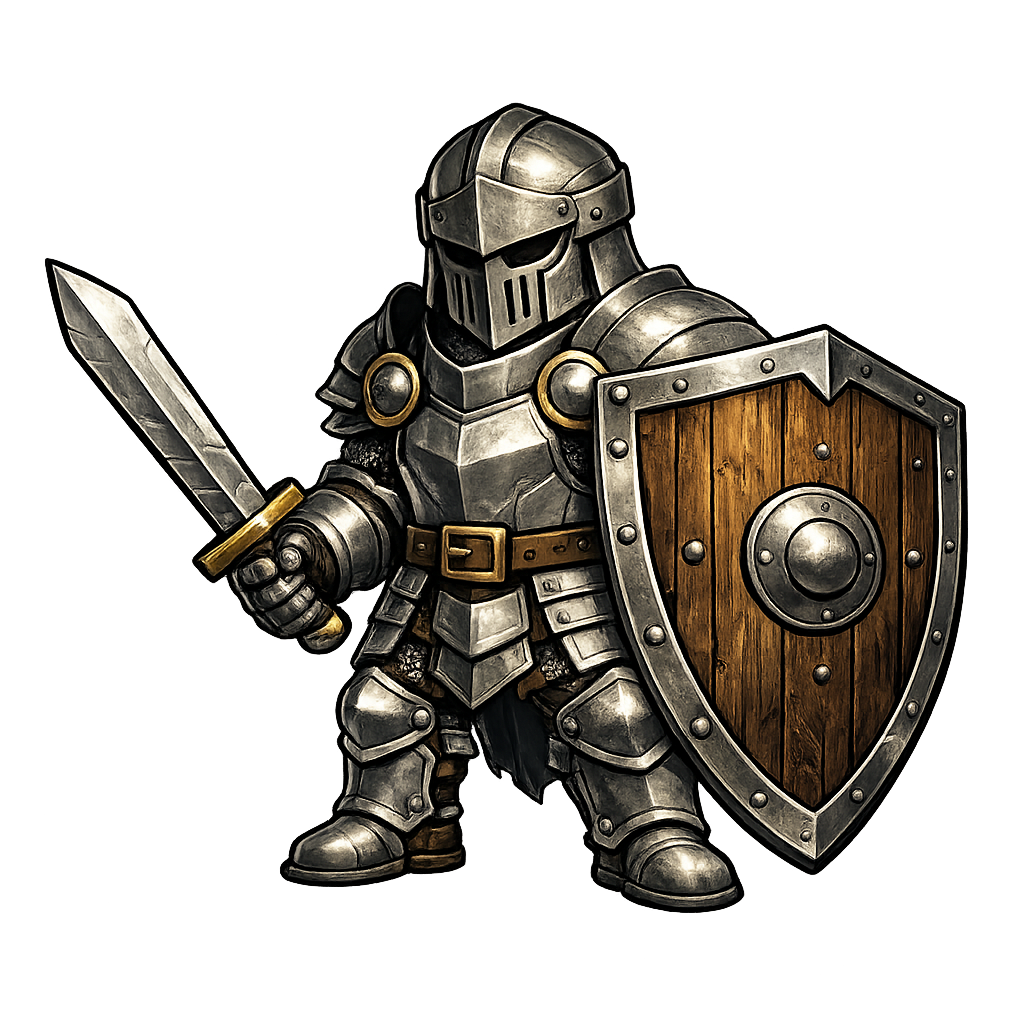
Learn more in Habit Soldiers and Soldier Classes.
Bad Habits Manifest Demons
Bad habits flip the script. Every bad habit spawns a demon - a hostile figure, named after one of the seven deadly sins, that exists to remind you of the behavior you're trying to beat.
Demons don't join your party in battle. Instead, their HP tracks in reverse: giving in feeds the demon, avoiding it on a scheduled day starves it. The goal is to watch a demon wither away one missed temptation at a time.

The psychology
The inversion is deliberate. Good habits need an approach mechanic - log it, earn it. Bad habits need an avoidance mechanic, because the right action is not doing the thing. Framing "nothing" as the winning move makes passive success feel real.
Learn more in Habit Demons and The Seven Deadly Sins.
Tasks and Journals Feed XP and Silver
Not every action powers combat directly. Completing tasks and writing journal entries feed a second track - your avatar's XP and your silver balance.
- Avatar XP grows your level, unlocks habit slots, and gates some of the game.
- Silver is the currency you spend on your own real-world rewards via the Wishlist.
Good habit completions feed both tracks too, on top of spawning their soldier.
Goal Progress Unlocks Dungeons
Goals are the biggest real-life unit in Scope, and they get the biggest in-game payoff. Complete a premade goal - work through its sub-goals, read its infocards, check its tasks off - and the dungeon attached to it unlocks.
The dungeon's required habits are the ones you've been keeping along the way. The soldiers those habits spawned are the party you take in. The boss at the end is the final proof that you actually did the work.
Learn more in Goals, Premade Goals, and Dungeons.
Real-Life Stats: The Passive Layer
On top of all of this, there's a quieter layer: real-life stats. Seven numbers on a 0-100 scale that reflect who you are right now - Strength, Vitality, Intelligence, Clarity, Social, Charisma, Willpower. They're not allocated. They grow when you complete habits tagged for them, write journal entries, or read premade-goal infocards. They slowly decay when you stop.
Four of them - Strength, Vitality, Intelligence, Clarity - quietly multiply your avatar's combat numbers through zone-based modifiers. The more consistent your recent life pattern, the harder your avatar hits, no matter what your equipment says.
Learn more in Real-Life Stats (User Guide) and Real-Life Stats (Avatar).
Why This Matters
The whole architecture is built around one simple idea: nothing in the game is reachable without real-life engagement. A player who grinds the app for a weekend can't stash power for later - their stats decay, their habits rot, their soldiers weaken. A player who shows up every day compounds.
That's not a nudge, it's the structure. Every reward in Scope has a real-life hook upstream of it. The game is the incentive; your life is the gameplay.